

France has tabled a draft resolution at the UN Security Council
calling for action to stop the upsurge in violence in Burundi.
A cycle began in April with protests against President Pierre Nkurunziza's controversial decision to stand for a third term.
On Saturday, nine people were shot dead in a bar in the capital Bujumbura.
UN Secretary-General Ban Ki-moon condemned the killings on Monday and said that the dead included a UN staff member.
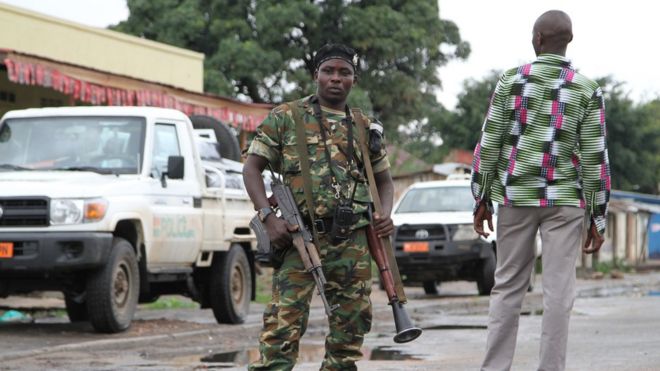
A policeman is reported to have been injured and at least two people killed as government forces search house to house for weapons in opposition neighbourhoods.
President Paul Kagame of Rwanda has been critical of the way its neighbour is dealing with crisis and there is increasing concern that the spiral of violence could be taking on more of an ethnic dimension, BBC Africa Correspondent Alastair Leithead says.
French Deputy Ambassador to the UN Alexis Lamek told AFP that France was "extremely worried by what we are seeing in Burundi at this moment: this increase of political violence and the extremely alarming ethnically-based hate speech".
France's mission at the UN said negotiations on its draft resolution would begin on Monday evening.
The Brussels-based International Crisis Group has warned the language being used in the current crisis is "chillingly similar" to that used in Rwanda before the genocide of 1994.
Protests began in April when Mr Nkurunziza argued that his first term as president did not count towards the constitutional two-term limit as he was chosen by lawmakers.
In July, Mr Nkurunziza was re-elected to a third term with 70% of the vote.
About 200 people have been killed since April.
Burundi: Key facts
The country is facing its worst turmoil since the 12-year civil war ended in 2005
-
10.4m population
-
50 years - life expectancy for a man
-
2nd poorest country in the world
-
85% are Hutu, 14% Tutsi
-
300,000 died in civil war
Tags
World